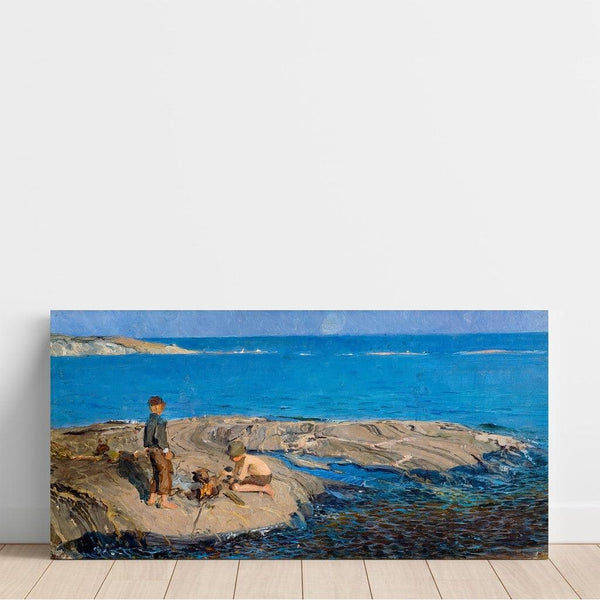
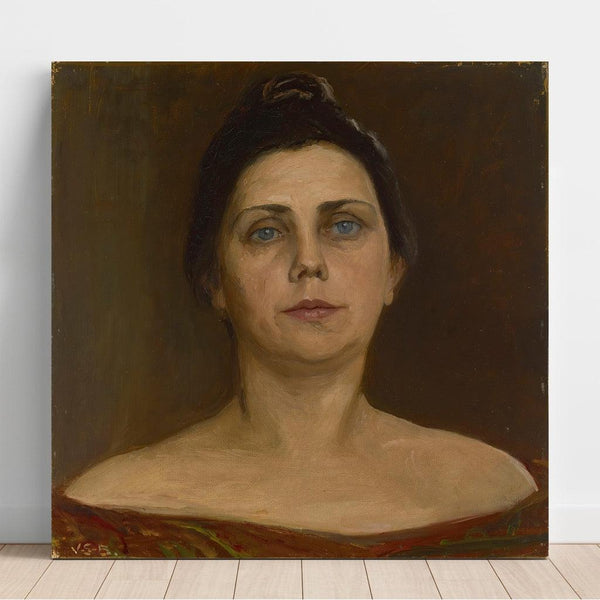
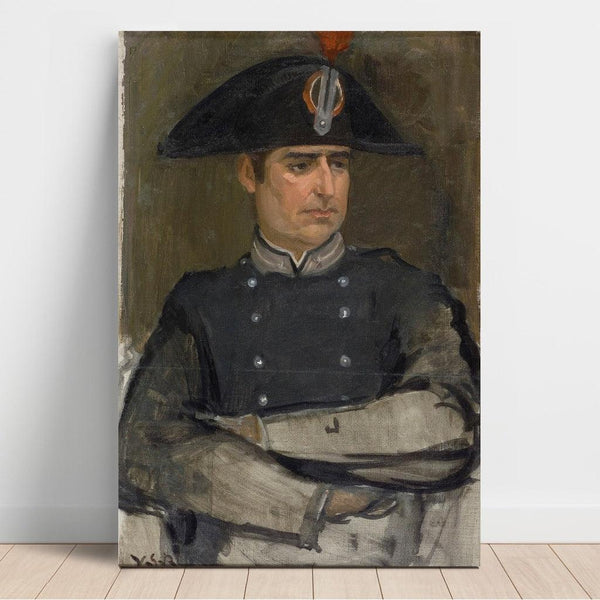
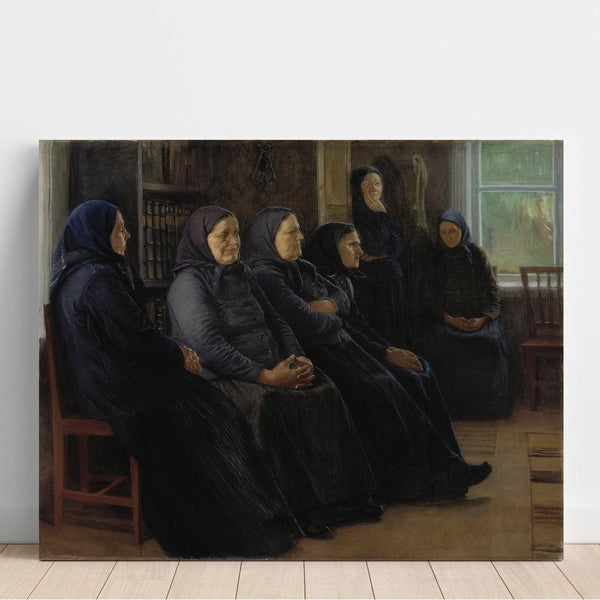
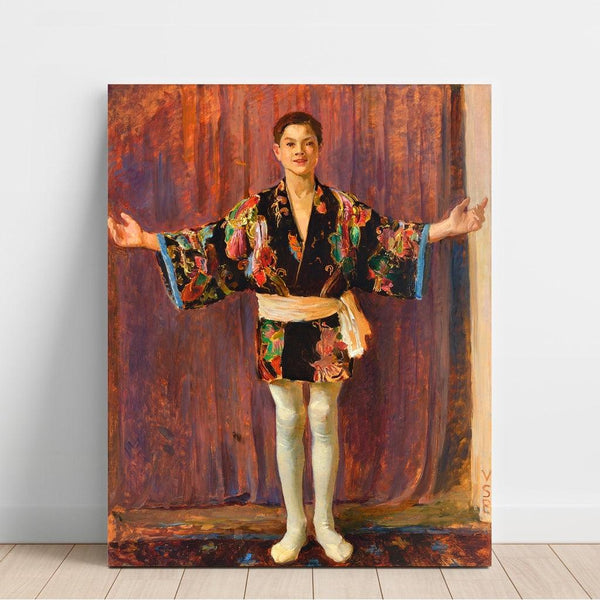
In the history of late nineteenth-century Finnish painting, the name of Venny Soldan-Brofeldt holds a discreet yet tenacious place. A contemporary of a generation of artists who carried Finland onto the European stage, she belongs to the moment often called the golden age of Finnish art, a period during which a young nation in search of a cultural identity saw the emergence of leading painters, sculptors, and writers. Attentive to the real, sensitive to faces and to scenes of everyday life, Venny Soldan-Brofeldt left behind a body of work that deserves to be considered on its own terms, far from convenient shortcuts. This article offers a measured journey through her life, her training, and her achievements, in order to convey their significance with accuracy.
An artist of the Finnish golden age
Venny Soldan-Brofeldt was born in 1863 in Helsinki and died in 1945. Her long life thus spans a decisive period for Finnish culture, from the national affirmation of the late nineteenth century to the upheavals of the first half of the twentieth. She belongs to that remarkable cohort of Finnish women artists who, in the same era as Helene Schjerfbeck or Ellen Thesleff, chose painting as a vocation in its own right and managed to establish themselves in a milieu still largely dominated by men.
Her career, moreover, was not limited to the easel painting alone. Trained in drawing and painting, she also took an interest in modeling and illustration, revealing a plastic curiosity that overflows the usual categories. This plurality of means, common among the artists of her generation, reflects a conception of the craft in which observation takes precedence over specialization, and in which the hand ceaselessly seeks the truest form to render what it sees.

From Helsinki to Paris: a demanding training
Like many of her compatriots, Venny Soldan-Brofeldt first trained in Finland before reaching Paris, the essential artistic capital for anyone who then wished to perfect their apprenticeship. At that time the city welcomed a substantial colony of Nordic artists, drawn by the teaching of the independent academies, which were more open than the official institutions and, notably, more accessible to women, who remained excluded from certain courses of study.
This passage through France was decisive. It brought the young artist into contact with naturalism and open-air painting, two currents that profoundly marked the Parisian scene of the 1880s. The attention paid to light, to the everyday motif, and to the truth of attitudes, found in so many Finnish painters returning from Paris, lastingly imbued her manner. From this stay she brought back a solid craft and a sensibility attuned to human figures captured in their simplicity, without superfluous effects.

This grounding in direct observation can be read in her taste for the portrait and for scenes caught from life. Rather than seeking idealization, Venny Soldan-Brofeldt tends toward an accuracy of expression, a fidelity to the character of beings and situations. This is a fundamental trait of Nordic painting of that period, of which her work constitutes a personal and restrained variant.
A body of work between realism and intimacy
Among the concerns that run through her work is her attention to the human face. The portrait, a demanding genre if ever there was one, holds a central place in it. The Portrait of Juhani Aho, which depicts the Finnish writer to whom the artist was closely bound, illustrates this vein: the image of a man of letters captured in a sober presence, where psychological analysis matters more than pomp. This kind of portrait, rooted in a personal and intellectual relationship, reveals the way in which the artist made her painting and her immediate surroundings converse.

Her interest in the great pictorial tradition is also apparent in a copy of Rembrandt's painting depicting the Holy Family. The practice of copying after the masters was, at the time, a recognized means of training and homage, through which an artist measured themselves against the composition, the light, and the substance of a revered model. That Venny Soldan-Brofeldt confronted Rembrandt, the absolute master of chiaroscuro and of the humanity of figures, says a great deal about her ambitions and about the visual culture that nourished her own gaze.
Beyond these examples, her art is marked by an economy of means and an expressive restraint that keep it far from any spectacular effect. Everyday life, interiors, familiar faces make up a repertoire in which painting seeks less to surprise than to make present. This fidelity to the real, without emphasis, places Venny Soldan-Brofeldt in the lineage of a Nordic naturalism attentive to the truth of beings.
Travels, cultural life, and posterity

Venny Soldan's marriage to the writer Juhani Aho, one of the great names of Finnish literature, placed the artist at the heart of her country's intellectual life. The home they made became a meeting place for the creators of their time, bringing painters and men of letters together in a shared movement of cultural renewal. This closeness between the arts and literature, characteristic of late nineteenth-century Finland, offers an illuminating backdrop for understanding the place she occupied.
Travels also played their part in her journey. Italy, a classic destination for artists in search of the masterpieces of the past and of southern light, left its mark, as attested by a work evoking the carnival in Florence. These sojourns beyond the Nordic borders broadened her horizon and nourished a painting open to the motifs of social and festive life, captured with the same concern for observation as her Finnish subjects. In them we find the gaze of a curious artist, attentive to colors, to costumes, and to the animation of collective scenes.
Today, the work of Venny Soldan-Brofeldt remains less known to the general public than that of certain of her contemporaries, yet it continues to interest those who explore the richness of Finnish art from this period. Reproductions of her paintings, among them the Portrait of Juhani Aho and the Carnival in Florence, help keep alive the memory of an artist whose sobriety and accuracy deserve an attentive rediscovery. Far from easy effects, her painting invites a patient gaze, attuned to the measure and the truth that were her own.
Discover the full range of reproductions of paintings by Venny Soldan-Brofeldt.