
Art prints of paintings
Léon Spilliaert
Explore our collection of art prints of Léon Spilliaert, the Belgian master of symbolism and dreamlike atmospheres. Enhance your interior with poetic and contemplative decor through his iconic works, available as posters and canvas prints.


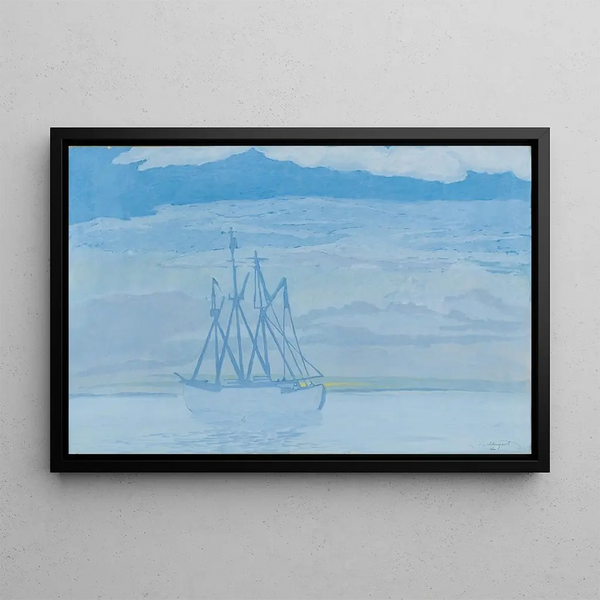
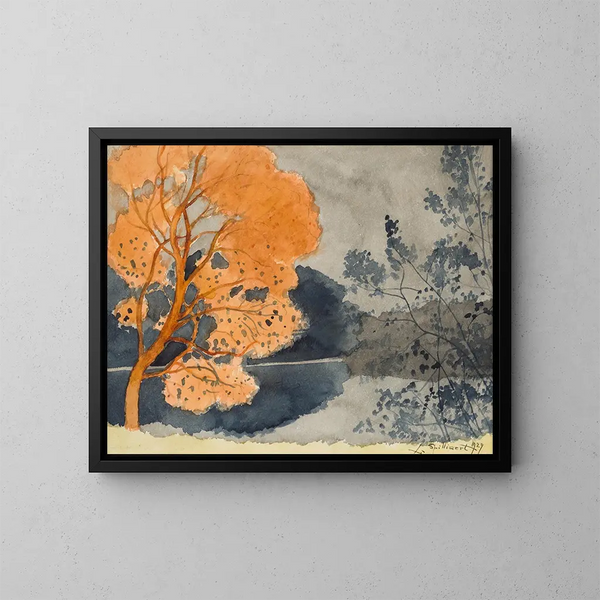
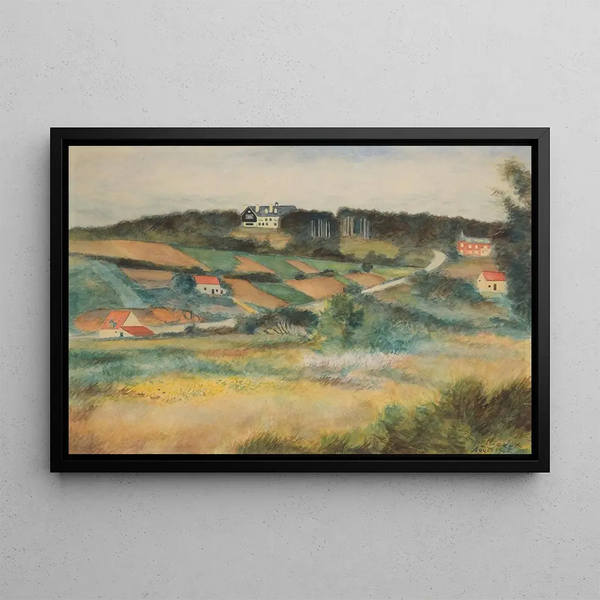
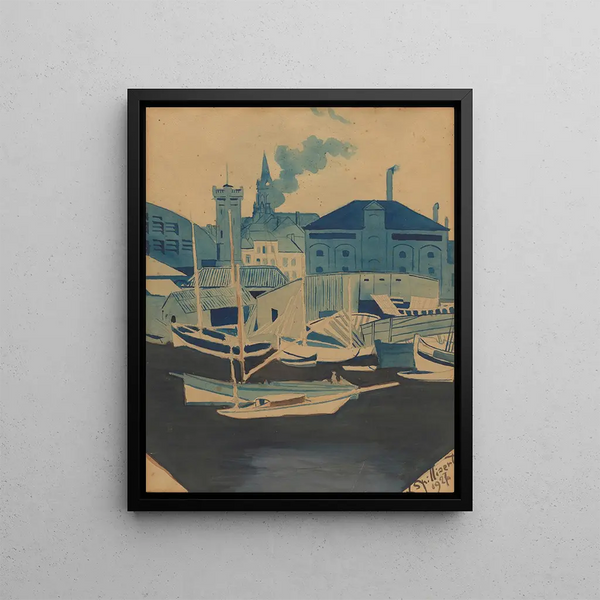
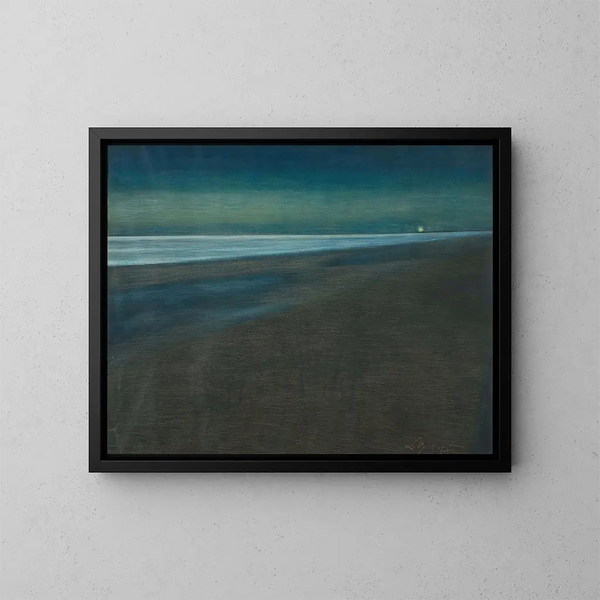


Discover reproductions of paintings and works on paper by Léon Spilliaert (1881–1946), a Belgian artist closely associated with Ostend. Mirror self-portraits, nocturnal sea walls, beaches, ports, lighthouses, women fishers, interiors and trees form an immediately recognisable world. This selection traces the variations within an oeuvre that moves through symbolism, personal expression, landscape and everyday observation without being confined to a single label.
Léon Spilliaert, an artist of Ostend
Born in Ostend in 1881, Spilliaert maintained a deep connection with the coastal city throughout his life. The sea, sea wall, quays, streets and inhabitants provided motifs that he transformed through framing, light and empty space. Port of Ostend, The Sea Wall at Ostend Seen from the Pier and The Commercial Docks at Ostend show three different scales of this territory.
His training was largely self-taught. He developed his techniques through practice and by observing other artists, while working mainly on paper. His path also took him to Brussels and Paris, before regularly bringing him back to Ostend. Léon Spilliaert and Madeleine on a Walk in Ostend later connects the city with his family life.
Draughtsman, painter and paper-based artist
The research website developed with Mu.ZEE notes that Spilliaert mainly used Indian ink, watercolour, coloured pencil, gouache and pastel. These media allow for deep blacks, washes, transparencies and touches of colour. The term “painting” remains appropriate when presenting his compositions, but understanding the importance of paper helps viewers appreciate their material and luminous effects.
Self-Portrait in Red Pencil shows how a limited colour can focus the eye. Vegetal Inkwell and Mirror combines simple objects with a play of reflections. The reproductions make it possible to compare these visual techniques without confusing the original artwork’s support with the printing medium offered on each product page.
Ostend, the Sea Wall and Nocturnal Walks
Mu.ZEE connects Spilliaert’s major works with his nocturnal wanderings through Ostend and his long walks along the beach. The sea wall becomes an almost abstract perspective: lines of lights, railings, curves and empty spaces guide the eye. Ostend Sea Wall with Street Lamps and Sea Wall and Lights of Ostend place the repetition of light at the centre of the composition.
Sea Wall and Beach, Royal Chalet and Galleries of Ostend introduces architectural landmarks, while View of the Beach at Night reduces the scene further to darkness, the horizon and reflections. These works suit understated interiors where a few strong lines are enough to structure a large wall.
The Sea, the Beach and the Horizon
Spilliaert’s sea is never simply a backdrop. It may be bright, black, green, calm or swept by the wind. Black Seascape, Light Green on the Sea and Seascape offer very different palettes around the same horizon.
The beach appears in The Beach, Low-Tide Beach and Beach with Moon. The receding water, moonlight and empty expanse alter the perception of space. The Gust of Wind transforms the air, by contrast, into a visible force through the movement of the figures and clothing.
Lighthouses, Boats and Harbour Activity
The lighthouse is both a geographical landmark and a luminous axis. The Lighthouse, The Ostend Lighthouse at Sunrise and The Lighthouse with Signals allow comparison of the building’s silhouette according to the time of day and framing.
Boats and basins complete this coastal landscape. Trawler at Sea, Seascape with Sailing Boats, View of the Harbour and Dokken in Ostend introduce masts, hulls and quays. A harbour composition can be paired with a nocturnal sea wall to create a diptych devoted to Ostend.
Women Fishers, Female Strollers and Figures Facing the Sea
Fishermen’s wives and female strollers bring a human presence to coastal spaces. Fisherman’s Wife on the Jetty and Woman Fisher are rooted in harbour life. Fishermen and Women Fishers broadens the scene to include a group.
In Woman by the Sea, Young Girl on the Beach and The End of a Fine Day, Backlit Figure, the silhouette measures the expanse of the shoreline. Girls on a Dune and Little Girls before the Wave offer more collective compositions.
Self-Portraits, Mirrors and Self-Observation
Spilliaert’s self-portraits from 1907–1908 are among his best-known works. Mu.ZEE’s research project highlights that he depicted himself from several angles, sometimes only a few days apart, and that he continued this practice beyond this period. Self-Portrait with Mirror uses the reflection to multiply the planes and reveal the interior space.
Self-Portrait and Self-Portrait with Blue Sketchbook show distinct approaches to the face and to the artist at work. Silhouette of the Painter reduces the presence to a dark form. For a portrait wall, two closely related framings create a particularly powerful dialogue.
Vertigo, Solitude and Psychological Space
Spilliaert often creates tension with staircases, plunging perspectives, empty areas or an isolated figure. Vertigo announces this sensation directly in its title. Pit also uses depth and framing to disorient the eye.
The Absinthe Drinker focuses attention on a solitary figure, while Woman Bending makes posture the the principal expressive force. These works can serve as the dark focal point of a display, balanced by a light seascape or a more open landscape.
Interiors, furniture and familiar objects
The family home and its objects frequently appear in works created before 1916. Mirrors, chairs, lamps, plants and furniture become clues to human presence. Interior with Chair and Opaline Lamp organises the space around a limited but highly legible selection of furniture.
The Porcelain Dog, The Blue Bucket and Still Life with Turnips and Carrots show the attention devoted to everyday objects. Doll in an Armchair introduces an ambiguous presence between still life and figure.
Portraits, Loved Ones and Personalities
Alongside his self-portraits, Spilliaert depicted members of his circle and various personalities. Portrait of My Brother, Portrait of Madame Storck-Hertoghe and Portrait of Henri Vandeputte offer access to more personal or literary relationships.
Portrait of Adolphe Van Glabbeke, Portrait of Gustave and Norine Van Hecke and Portrait of Miss Simonne Kremer broaden this group. Differences in framing and treatment make it possible to create a gallery without mechanical repetition.
Women, Dresses and Everyday Scenes
The female figures appear in simple poses, sometimes absorbed in an activity. Woman Writing a Letter stages an introspective moment. Woman in a Pink Hat and White Dresses give greater prominence to colour and clothing.
Woman with a Greyhound, Lady at an Exhibition and A Man and a Woman Sheltering beneath a Vault of the Drie Gapers connect the figure with the setting. These works find their place easily in a hallway, bedroom or portrait wall.
Trees, Forests and Seasons
Trees gradually become an important motif, particularly in the later works. Trees, Tree Branches and Large Tree move from the repetition of trunks towards the individualisation of a silhouette.
The season transforms the palette: Trees in the Snow and Winter Trees favour contrasts, while Green Trees and Tree and Sky introduce a brighter range. Forest Landscape and Fir Forest are well suited to a wall composition devoted to vegetation.
Countryside, Farms and Landscapes interiors
Beyond Ostend, Spilliaert observes the nearby countryside and the places where he stays. Landscape of the Keignaertkreek in Zandvoorde and The Keignaertkreek in Zandvoorde offer two views of the same wetland territory.
Farm near the Nukkerwijk district, Sas-Slijkens, Farm along the Gistel road and Farm, the Pink Façade draw on rural architecture. View of Sint-Genesius-Rode and Pond in Autumn broaden the geographical and seasonal range.
When Nanette Was Lost and the Narrative Image
Spilliaert also worked in connection with books and illustration. The plates from When Nanette Was Lost form a distinct narrative series. Plate 2, Plate 3 and Plate 4 can be arranged in sequence to create a coherent triptych.
Other subjects, such as Resurrection, Calvary and Purgatory in the East or Masquerade: Leopold II, Napoleon and the Flower Seller, introduce an allegorical, religious or satirical dimension.
Modern Ostend, Leisure and Urban Transformations
The seaside resort is also a place of leisure and modernity. Skaters in Marie-Henriette Park in Ostend combines landscape with seasonal activity. Leopold Park with the Pond and the Trinkhall in the Snow transforms a familiar urban space through winter light.
The Airship Belgique II in Its Hangar reflects an interest in new technology. The Wellington Hippodrome and the Royal Palace Hotel after the Second World War finally places the urban landscape within a later historical memory.
Choosing a Reproduction of Léon Spilliaert
To recapture the artist’s most characteristic atmosphere, choose a nocturnal sea wall, a lighthouse, a moonlit beach or a self-portrait in a mirror. Lighter seascapes and landscapes offer a greater sense of space. Interiors, portraits and objects suit smaller formats, while sea-wall or harbour perspectives can anchor a large wall.
- A nocturnal atmosphere: favour blacks, deep blues and aligned lights.
- A minimalist interior: choose a self-portrait, an isolated object or a silhouette.
- A coastal diptych: pair a sea wall with a seascape or lighthouse.
- A plant-filled wall: bring together winter trees, branches and a forest landscape.
Each product page lists the available supports, dimensions and options for the artwork concerned. Select the support and then the format so that to display the proposed combination and its price.
Frequently Asked Questions About Léon Spilliaert
Was Léon Spilliaert a Symbolist or an Expressionist?
His work engages with Symbolism and sometimes displays an intensity associated with Expressionism, but it evolved over several decades. It is more accurate to consider its periods, techniques and subjects than to confine it to a single category.
Why did he create so many self-portraits?
Self-portraiture allowed him to study his face, his inner life and different states of presence. Mirrors, viewpoints and closely related variations reveal a practice of self-observation that continued beyond the celebrated years 1907–1908.
What role does Ostend play in his work?
Ostend is a central subject: the sea wall, beach, sea, port, lighthouses, parks, fisherwomen and seaside architecture appear regularly. His walks through the city and along the shore inspired many of his compositions.
Was Spilliaert a painter or a draughtsman?
He worked primarily on paper using ink, watercolour, pencil, pastel and gouache, but he also created paintings. Both terms can therefore be used, provided that the major role of drawing and works on paper is recognised.
How can I find out which formats and prices are available?
Open the page for the chosen artwork, select the medium and then the dimensions. The available options and corresponding price are displayed according to the proposed combination.
Documentary references: Mu.ZEE in Ostend and the Léon Spilliaert research project developed with Mu.ZEE, Toerisme Oostende and Toerisme Vlaanderen.